
Each player receives thirteen cards face down. The dealer then turns one card face up next to the closed stock pile; that card's rank becomes the wild joker for the hand, with both printed jokers also standing in for any rank when picked from the closed pile. The remaining stock pile sits closed and face down to the right of the open card.
Turn order runs clockwise from the player to the right of the dealer. Each turn consists of drawing one card (from either pile) and discarding one card face up onto the discard pile. The player to the right of the dealer plays first.
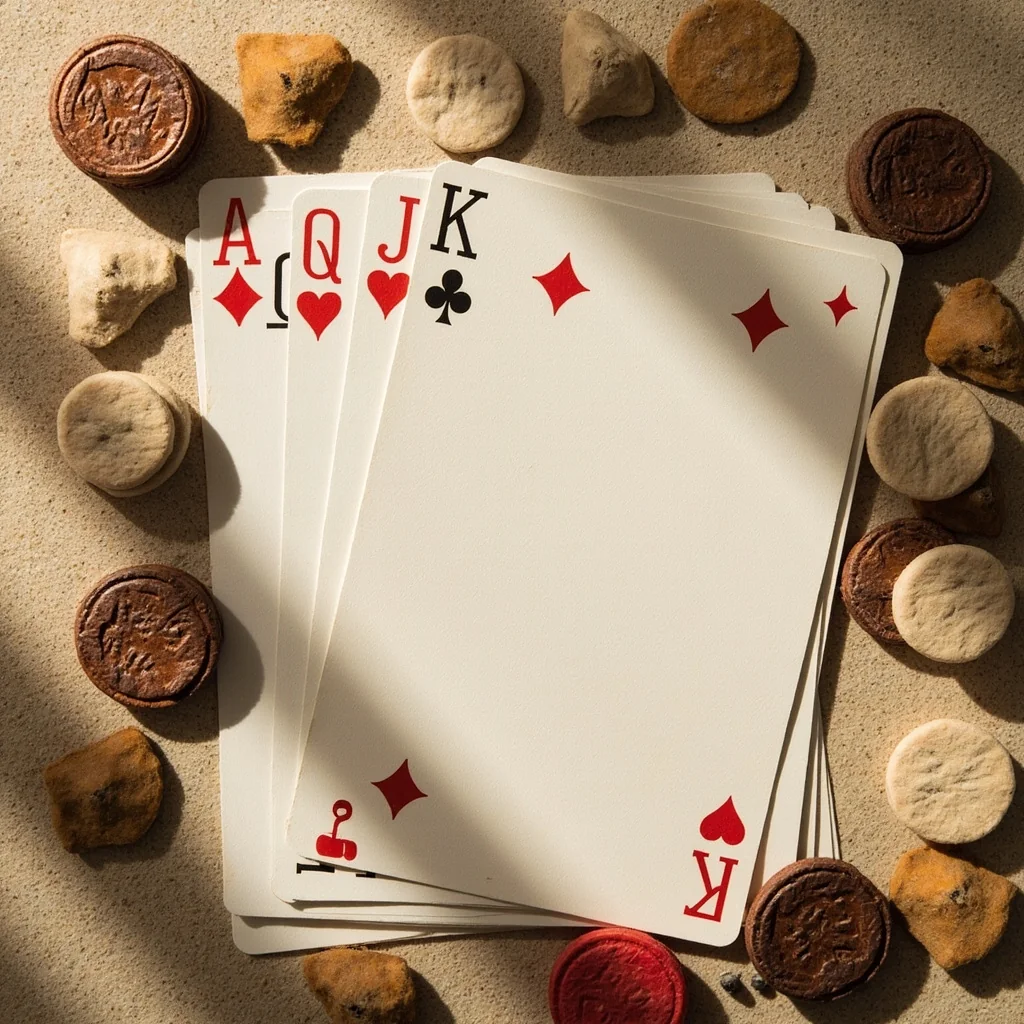
Most players sort by suit within the first turn. Suits matter more than ranks because a pure sequence (a same-suit run in order) is the constraint that decides whether you can declare at all. Sort the spades, the hearts, the clubs and the diamonds into loose order, then look for adjacent ranks within a single suit.
If you cannot find any adjacent ranks within a single suit, the hand is in trouble and the right move is usually a first drop before the third card is drawn. A first drop on the standard ladder costs 25 points. The desk publishes this number with the operator's published drop ladder, since the exact value varies.
A pure sequence is a run of three or more same-suit cards in numerical order, with no wild or printed joker standing in for a missing rank. A royal pure run of ace, two, three in one suit is the cleanest. Most formats require at least one pure sequence as a precondition for declaring.
The wild joker, picked at the start of the deal, cannot stand in for a missing rank in a pure sequence. The wild joker can only complete an impure sequence, a set, or stand alone as a free card. The desk treats this single distinction as the rule most beginners misunderstand.

There are four melds you can form in 13-card rummy: pure sequence, impure sequence, set (or trial), and the printed joker as a free card. A valid declare combines one pure sequence with at least one additional meld. An impure sequence cannot stand in for the pure sequence.
A set is three or four cards of the same rank across different suits. A four-of-a-kind set is the strongest set, but only when it uses no wild jokers, because a wild-joker-set is a separate category most operators mark on the score sheet.
The discard pile tells you what the table wants. A discard of a high rank in a suit no one is collecting suggests the table is avoiding that rank. A discard of a low rank in a suit your neighbour is collecting suggests the opposite.
You cannot draw from the discard pile in the standard rules. Some casual tables allow it. The desk publishes only the standard rules. If you are at a non-standard table, ask before relying on a discard-pile read.
When your hand contains one pure sequence and at least one additional meld, you may declare on your turn by laying the cards face up on the table grouped into the relevant melds. The remaining unmatched cards become the deadwood. The table then validates the declare by reading each meld aloud.
If the validation passes, you score zero. If the validation fails, you score 80 points as a penalty. The desk publishes the 80-point penalty as the standard value; always check the operator's published penalty value before joining a table.
You may drop a hand at any of three checkpoints: before drawing your fourth card (first drop), after drawing your fourth card but before declaring (middle drop), and after declaring incorrectly (full show penalty). Each checkpoint has a different cost. The standard ladder reads 25, 50, and 80.
The desk treats the drop ladder as a probability tool, not a guarantee. The right moment to drop depends on your unmatched count, the discard pile, and the table's pace. The strategy chapter expands these moments in detail.
Two kinds of joker sit on a rummy table. The printed joker is a fixed card in the deck and stands in for the rank it depicts. The wild joker is the rank turned up at the start of the deal; both printed jokers also stand in for the wild rank when picked from the closed pile.
The two cannot swap roles. A printed joker cannot be the wild joker. A wild joker cannot stand in for a missing rank in a pure sequence. The desk publishes this rule with the operator's published joker rules because the exact handling varies by format.
13-card rummy is a game of skill under Indian law. The Supreme Court of India has treated rummy as a game of skill in its observations. The desk publishes that legal position for the reader's verification. State-by-state restrictions on real-money play apply and the desk reminds readers to check their local rules before joining a paid table.
If a game stops being a game, stop the game. The desk publishes the national helpline numeral 14446 and the responsible play chapter as the only two resources needed at the close.
Do I need a pure sequence to declare?
Yes, in standard 13-card rummy. At least one pure sequence is mandatory, plus at least one additional meld (impure sequence, set, or a second pure sequence).
Can the wild joker complete a pure sequence?
No. The wild joker can only complete an impure sequence, a set, or stand as a free card. A pure sequence must be entirely natural.
What is the cheapest drop?
A first drop, before drawing the fourth card. The standard cost is 25 points against the player. Always check the operator's published drop ladder.
Can I draw from the discard pile?
Not in standard rules. Some casual tables allow it; the desk publishes only standard rules.
How is an invalid declare penalised?
An invalid declare costs 80 points under the standard penalty. Always recheck the pure sequence constraint before laying the cards face up.