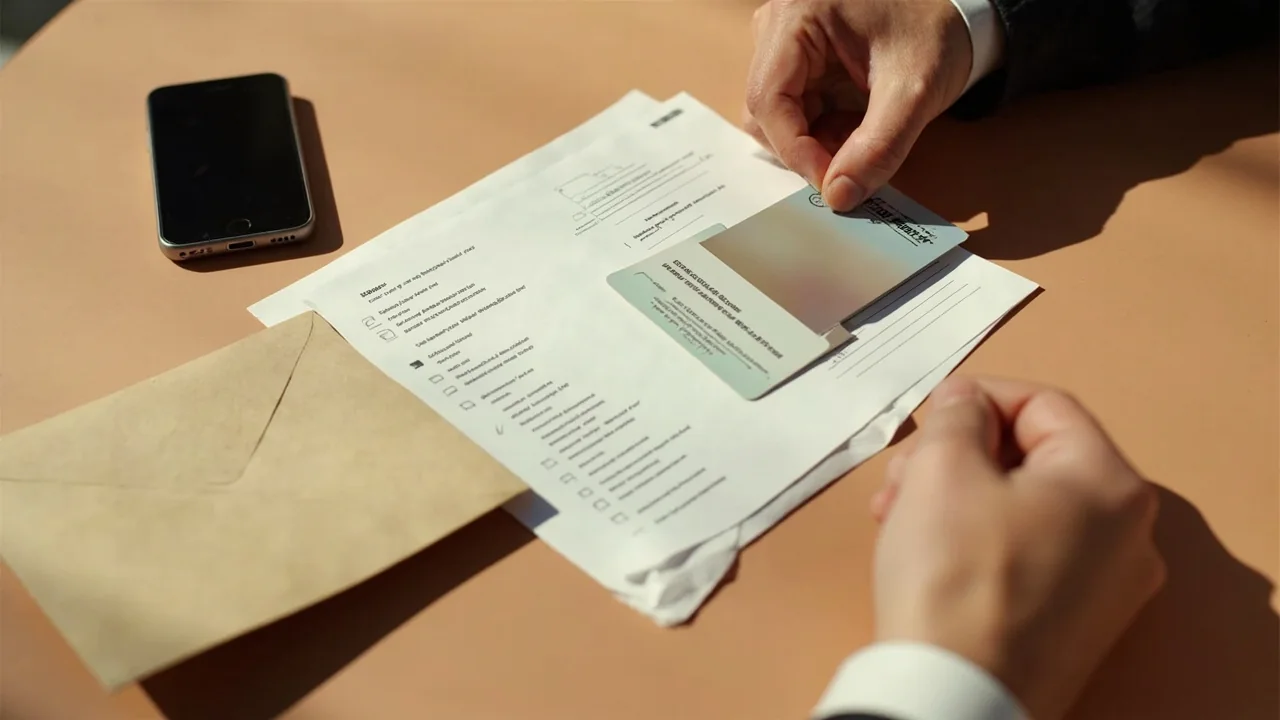
The desk publishes a paper-ledger explainer for verification. Each row carries one verification step, what it proves, and what it does not prove. A reader who understands the rows understands the operator's verification flow without needing to trust the operator's marketing copy.
Mobile number (OTP)
Proves you hold the SIM at sign-up. Does not prove identity.
One-tapEmail confirmation
Proves you hold the inbox. Useful for password reset and account notices.
Two-tapPAN (masked)
Required for cumulative withdrawals. The platform must mask all but the last four characters.
Tier 2Aadhaar (last four only)
Used for address confirmation. Never share the full Aadhaar number on chat or email.
Tier 3UPI ID verification
Proves you control the UPI handle. Withdrawal flow varies by operator.
WithdrawThe desk audited a sample of payment flows on UPI, IMPS and bank transfer. UPI scored best for time-to-credit; IMPS scored second; bank transfer scored last. Each method has different handling for declines and reversals, and the desk publishes the operator's published rules only.
The desk publishes account protection as three practical steps. First, set a deposit limit before the first deposit. Second, enable email notices for every login and every withdrawal. Third, store the operator's customer-care number outside the platform.

Every operator publishes a rules section, a privacy policy, a terms of service, a responsible play policy and a customer-care contact. The desk reads these five documents before publishing any verdict on a platform. A reader who wants to verify the desk's read can open these documents themselves.
The desk refuses to publish verdicts on operators whose published rules are inaccessible. The desk also refuses to publish verdicts on operators whose published rules are unclear about withdrawal timing, dispute resolution or account protection.
The desk does not verify the operator's marketing claims. The desk does not verify the operator's bonus terms. The desk does not verify the operator's welcome offers. The desk reads the operator's published rules only, with the assumption that the rules are the legal document the operator has committed to.
What does mobile OTP prove?
That you hold the SIM at sign-up. It does not prove identity. PAN and Aadhaar (last four only) are required for cumulative withdrawals.
How is PAN masked?
The platform must mask all but the last four characters of your PAN. The desk refuses to publish a platform that displays the full PAN in the user interface.
How is UPI withdrawal timed?
The desk audited a sample of withdrawals. UPI scored best for time-to-credit in the audit. The exact time depends on the operator and the network.
What should I keep outside the platform?
The operator's customer-care number, your deposit limit, and the date of your last login. Keeping these outside the platform means you can recover the account even if the platform's session is lost.